
Kenya’s emergency financing reveals how several crises are beginning to arrive at once
Kenya is expected to receive about $400m in rapid World Bank financing as it confronts higher energy costs, regional Ebola concerns and the risk of El Niño-related disruption. The package illustrates a growing development challenge: governments with limited fiscal space are being forced to manage climate, health, energy and economic shocks simultaneously.
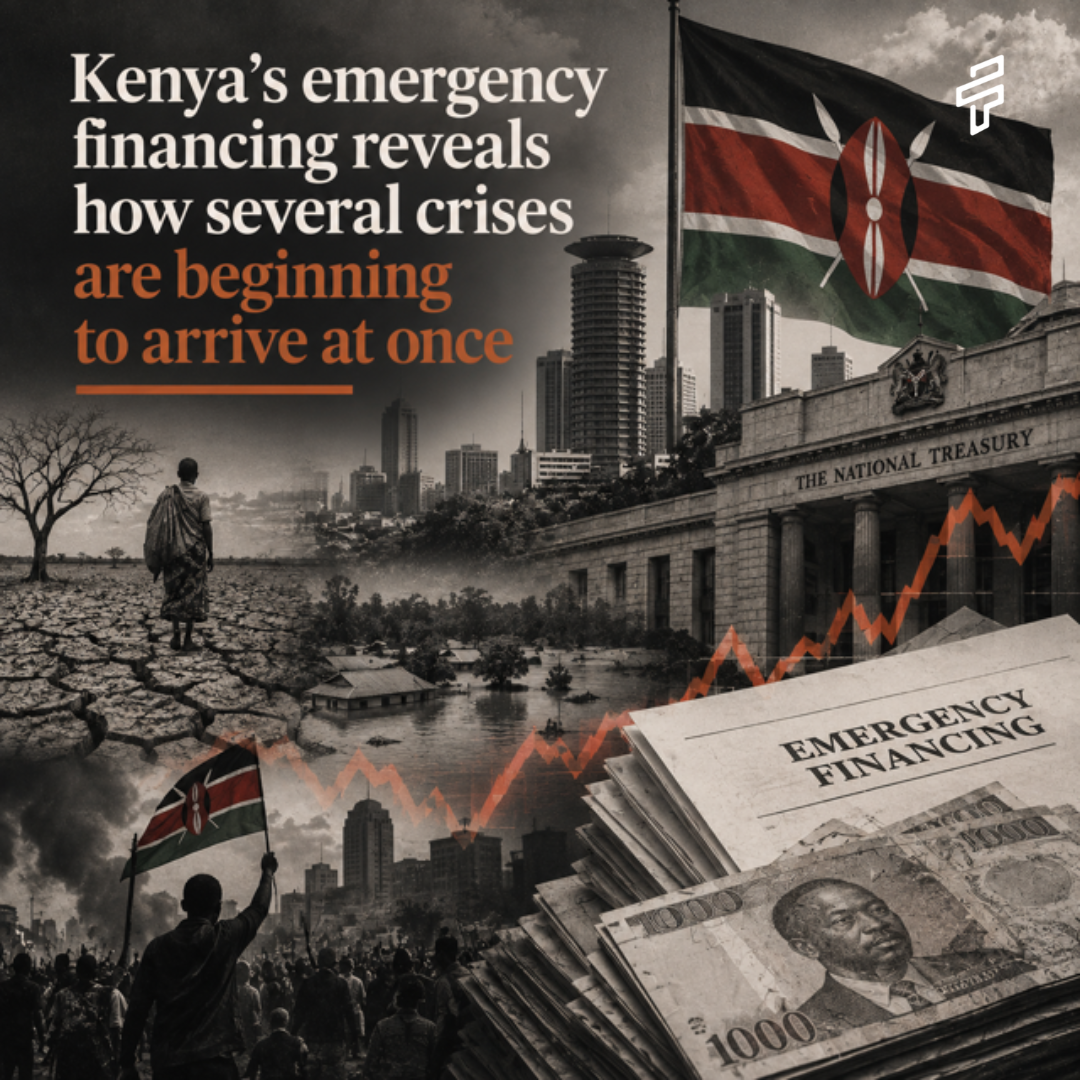
Kenya is expected to receive roughly $400m in emergency World Bank financing within six weeks, with the support intended to help the country manage higher energy costs, regional health risks and potential climate disruption. The funding is being arranged through the bank's Rapid Response Option and represents about 10% of Kenya's undisbursed World Bank portfolio.
The range of pressures is what makes the package notable.
Kenya is exposed to global energy prices because it imports petroleum. It faces potential agricultural and infrastructure disruption from El Niño-related weather. It is also monitoring the regional Ebola outbreak in the DRC, particularly because Kenya is an important East African transport and commercial hub.
Each of those risks would be manageable in isolation.
Together, they place much greater pressure on a government already dealing with debt repayments and limited fiscal room.
That is becoming a defining development problem for many African states.
Climate shocks can damage crops and roads. Higher energy prices increase transport and food costs. Disease outbreaks can disrupt trade and tourism. The government then has to spend more to cushion households and repair infrastructure, often borrowing at precisely the moment when borrowing is becoming more expensive.
Kenya's emergency financing buys time, but it does not remove those structural vulnerabilities.
The most useful question is therefore what the money enables the country to do before the next shock arrives.
Emergency funding can simply fill a budget hole. A more strategic use would strengthen the systems that make the next emergency cheaper: disease surveillance, climate-resilient infrastructure, agricultural adaptation and energy diversification.
The energy question is especially important. Oil prices have been pushed higher by the wider geopolitical disruption in the Middle East, exposing import-dependent economies to inflation that originates outside their control. For Kenya, that pressure arrives through fuel, transport and eventually the prices of ordinary goods.
Climate exposure operates in a similar way. Extreme weather is not only an environmental event; it creates fiscal liabilities. Roads have to be rebuilt, crops supported and households assisted. Preventive investment may therefore be cheaper than repeated emergency reconstruction.
The Ebola outbreak adds a regional dimension to the same argument. Congo's epidemic has spread beyond the provinces where it began, and neighbouring Uganda has also had to manage the Bundibugyo strain. Kenya's importance as a regional aviation and commercial hub makes public-health surveillance an economic issue as well as a medical one.
This convergence also changes what resilience means.
A state can no longer treat health, climate, energy and debt as separate policy silos when a shock in one sector quickly affects the others. The most resilient governments will be those that can coordinate across departments and use limited public money to reduce vulnerabilities before they become emergencies.
That is easier to prescribe than to finance.
Preventive spending produces benefits that are often invisible. A flood that never destroys a road does not create a dramatic political moment. A disease outbreak contained before it spreads produces no obvious headline. Governments, however, are frequently rewarded for responding to crises rather than preventing them.
Development institutions can help alter that incentive by making resilience financing as accessible as emergency financing.
Kenya's current arrangement is therefore worth watching beyond the size of the cheque.
The success of the intervention will ultimately be measured by whether Kenya emerges more capable of absorbing the next shock, rather than simply better able to survive the current one.