
Lagos Moves to Build Its Own Power Market as Nigeria’s Grid Struggles
Lagos is moving further away from dependence on Nigeria’s national grid, betting that state-level electricity regulation can deliver more reliable power for public facilities,…
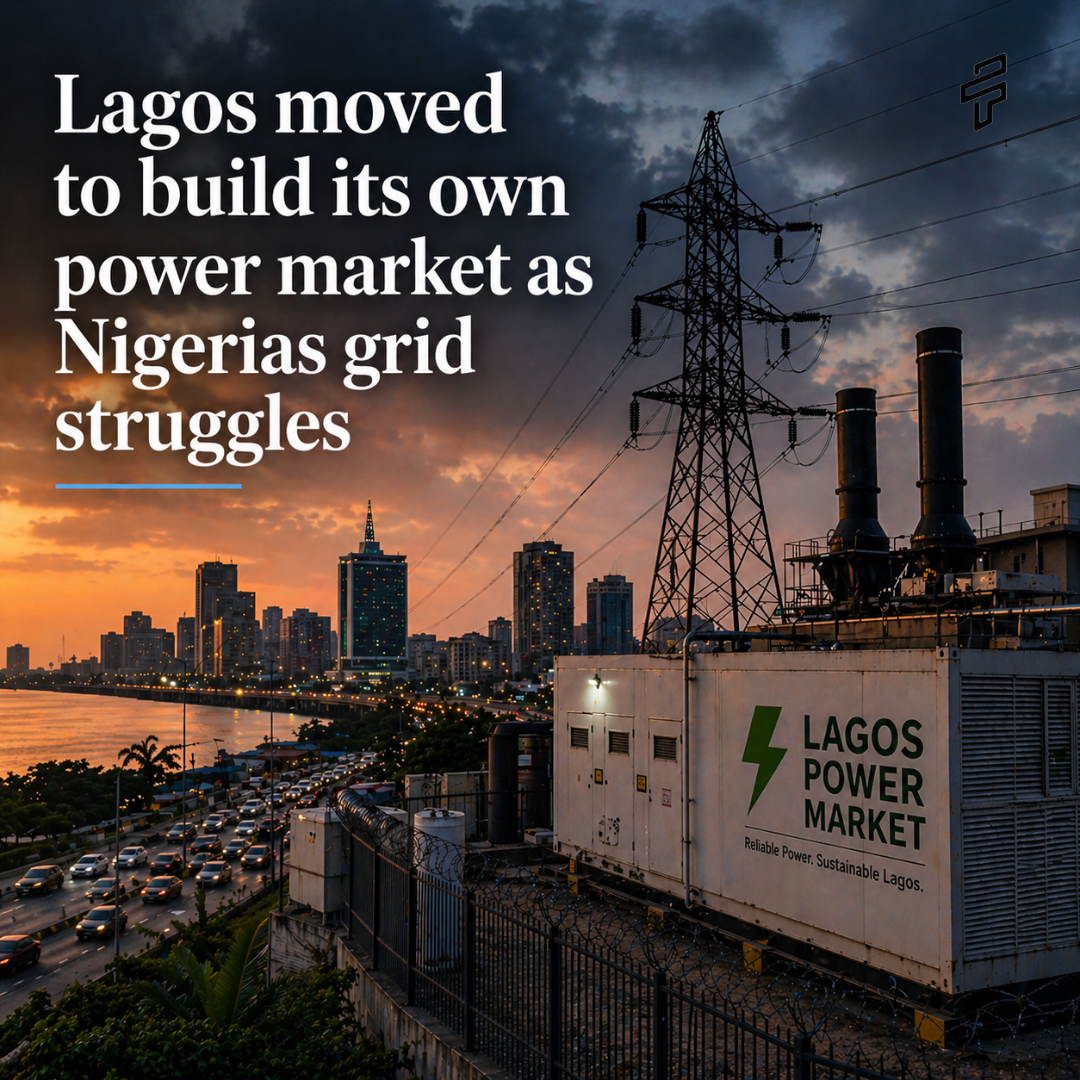
Lagos is moving further away from dependence on Nigeria’s national grid, betting that state-level electricity regulation can deliver more reliable power for public facilities, businesses and residents. Reuters reported that Lagos has secured 400 megawatts of new supply and become the first Nigerian state to assume full regulatory control of its electricity market.
The shift follows reforms allowing sub-national governments to regulate electricity within their territories. At least 22 other Nigerian states are setting up their own electricity markets, according to data cited by Reuters.
The logic is clear. Nigeria’s grid delivers about 3,000 megawatts on a good day, far below estimated demand of more than 30,000 megawatts. That gap has forced households and businesses into expensive generator dependence, with direct consequences for inflation, productivity and urban living costs.
Lagos has signed power purchase agreements with Fenchurch Power, Mainland Power and Viathan Engineering Limited to supply up to 400 megawatts to public facilities over three years. The state says it wants to move beyond a single point of failure.
Still, state-level power markets will not solve Nigeria’s electricity crisis automatically. Gas availability, foreign exchange exposure, transmission bottlenecks and tariff politics remain difficult constraints. But Lagos’ move is significant because it places energy governance closer to economic demand.
If Lagos succeeds, Nigeria’s electricity future may become less centralised, more competitive and more politically local.