
African States Turn Up Pressure on South Africa Over Xenophobic Attacks
Warnings from Kenya, Malawi, Lesotho, Zimbabwe and Ghana have turned South Africa’s anti-immigration violence into a continental governance test for Pretoria and the African Union.
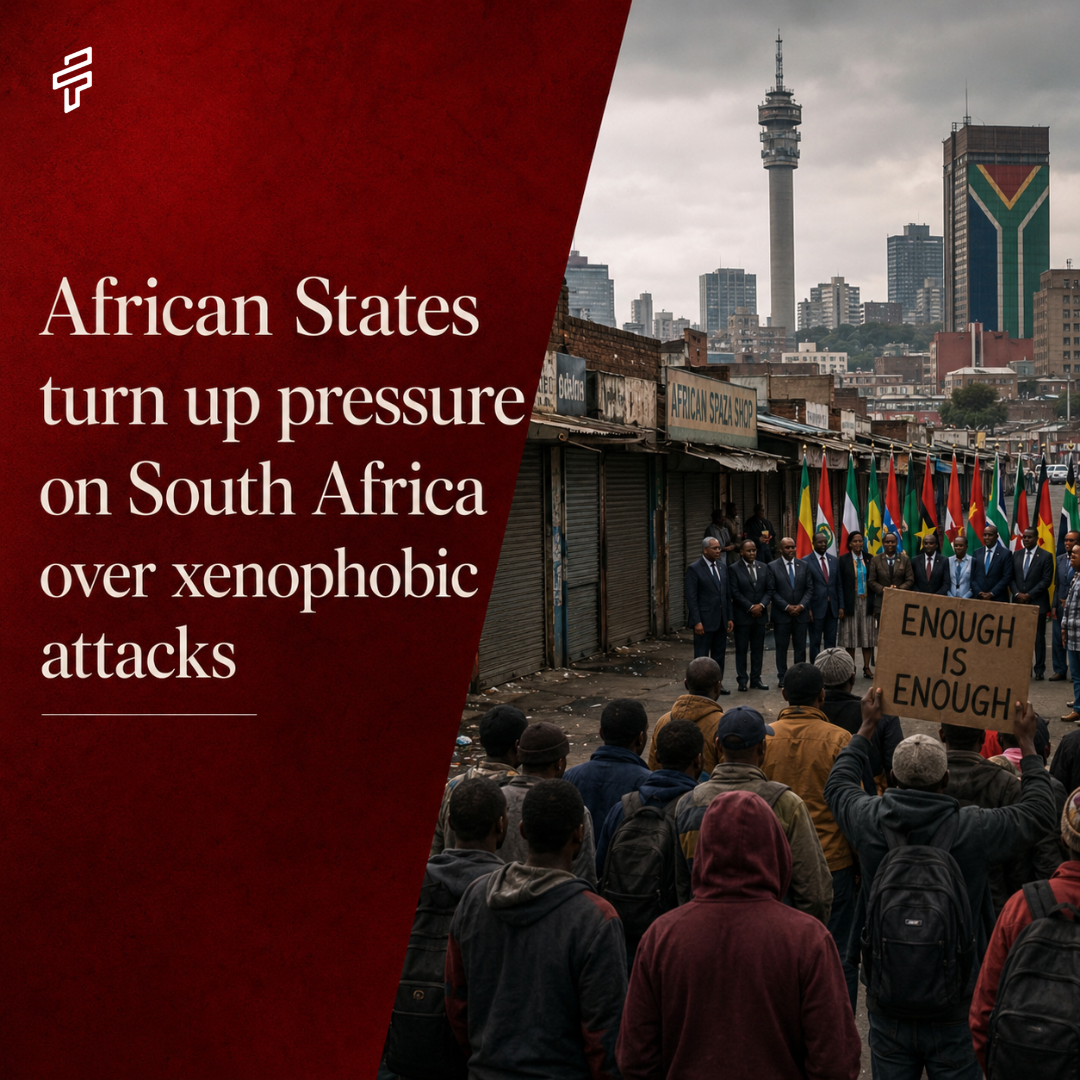
Several African governments have warned their citizens in South Africa to stay alert, remain indoors or take precautions after a wave of attacks targeting foreign nationals. Reuters reported that Kenya, Malawi, Lesotho and Zimbabwe issued warnings, while Ghana has asked the African Union to take up the issue.
The violence is linked to protests against illegal immigration, but migrant-rights groups argue that foreign nationals are being scapegoated for South Africa’s deeper economic crisis. Unemployment remains above 30%, and public anger over jobs, crime and public services has increasingly been directed at migrants from other African countries.
Ghana said it helped return one citizen who appeared in a viral video being harassed by a crowd demanding to see his papers. Nigeria has also said at least 130 of its citizens requested repatriation after recent protests and reported deaths of Nigerians.
The diplomatic pressure is widening. Mozambique’s President Daniel Chapo met South African President Cyril Ramaphosa and called for calm, while Ghana wrote to the African Union requesting intervention. South Africa’s government has condemned violence, but also acknowledged public frustration over illegal immigration.
This balancing act is becoming harder. Groups such as Operation Dudula have led campaigns against undocumented migrants, including efforts to block access to public health facilities. That moves the crisis beyond protest and into the territory of rights, public order and state authority.
South Africa’s immigrant population has increased from 2% of the national population in 1996 to 4% in 2022, with most migrants coming from the Southern African Development Community region. That makes the issue both domestic and regional. Pretoria is not simply managing border politics; it is managing relationships with neighbours whose citizens help power sections of the South African economy.
The risk for South Africa is reputational as well as political. The country presents itself as a continental leader, a BRICS voice and an advocate of African solidarity. But recurring xenophobic violence weakens that posture and hands other African governments a difficult question: how safe are their citizens in Africa’s most industrialised economy?
The immediate task is law enforcement. The larger task is governance. South Africa will need to confront migration policy, unemployment, public-service pressures and political mobilisation around foreigners without allowing vigilante politics to define the national mood.