
South Africa’s Xenophobia Crisis Is Becoming a Diplomatic Crisis
Fresh anti-immigrant violence is no longer only a domestic law-and-order issue for Pretoria. It is now damaging South Africa’s standing across Africa and raising harder questions about migration, state capacity and political responsibility.
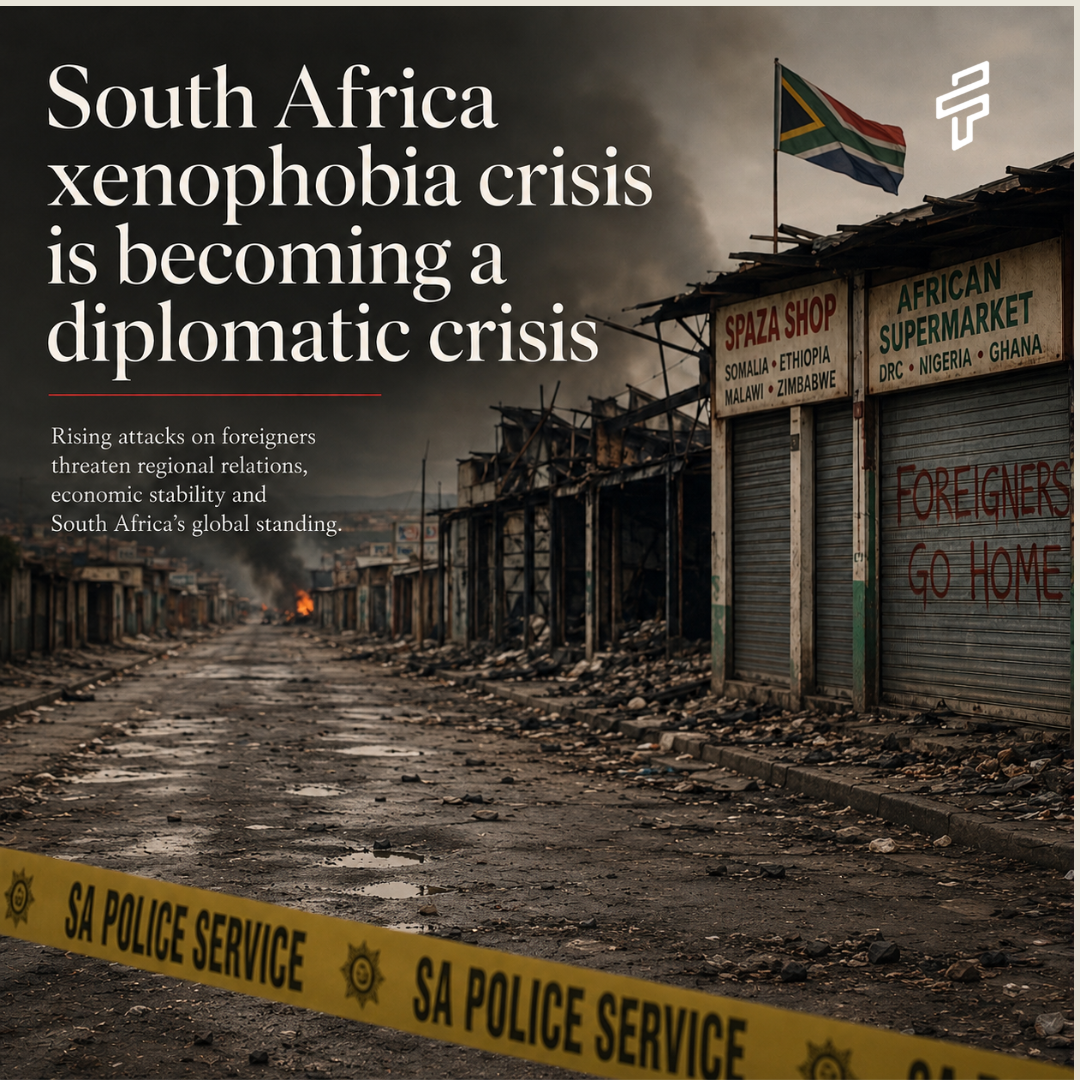
South Africa’s xenophobia crisis has entered a more damaging phase. Justice Minister Mmamoloko Kubayi said on Sunday that recent attacks on foreign nationals were hurting the country’s image abroad, while African migrants with long roots in South Africa continue to flee violence, looting and intimidation. Reuters reported that several countries, including Malawi, Ghana and Mozambique, have already moved to repatriate citizens or assist those seeking to leave.
The political problem for Pretoria is now larger than public disorder. South Africa’s anti-immigrant agitation has emerged in a country already under strain from high unemployment, weak service delivery and anxiety over crime. In that climate, migrants have again become convenient political targets. But the consequence is that South Africa is now exporting insecurity into its regional relationships. Countries whose citizens live and work in South Africa increasingly have to treat Pretoria not simply as a partner, but as a state failing to protect them.
There is also a deeper governance failure. Anti-immigrant groups insist they are protesting illegal migration rather than promoting xenophobia, but repeated outbreaks of violence show how quickly that distinction collapses when the state fails to enforce the law consistently and protect vulnerable communities. A government that appears unable to manage borders, document migrants and police mob violence creates the exact conditions in which vigilantism thrives.
For President Cyril Ramaphosa, this is no longer only a domestic security file. It is a diplomatic test and a moral one. South Africa’s post-apartheid identity was built in part on pan-African solidarity. If that principle no longer extends to African migrants living inside South Africa, then one of the country’s strongest foreign-policy narratives begins to weaken.
The immediate priority is obvious: restore order, protect migrants and prosecute attacks. The larger challenge is harder. South Africa must show that migration can be governed through law and policy rather than through fear, scapegoating and street-level coercion.