
Tinubu’s Debt Warning Places Africa’s Borrowing Crisis at the Centre of Nairobi Summit
Debt service is no longer a technical budget item. It is now a political constraint on infrastructure, healthcare, education and industrial policy.
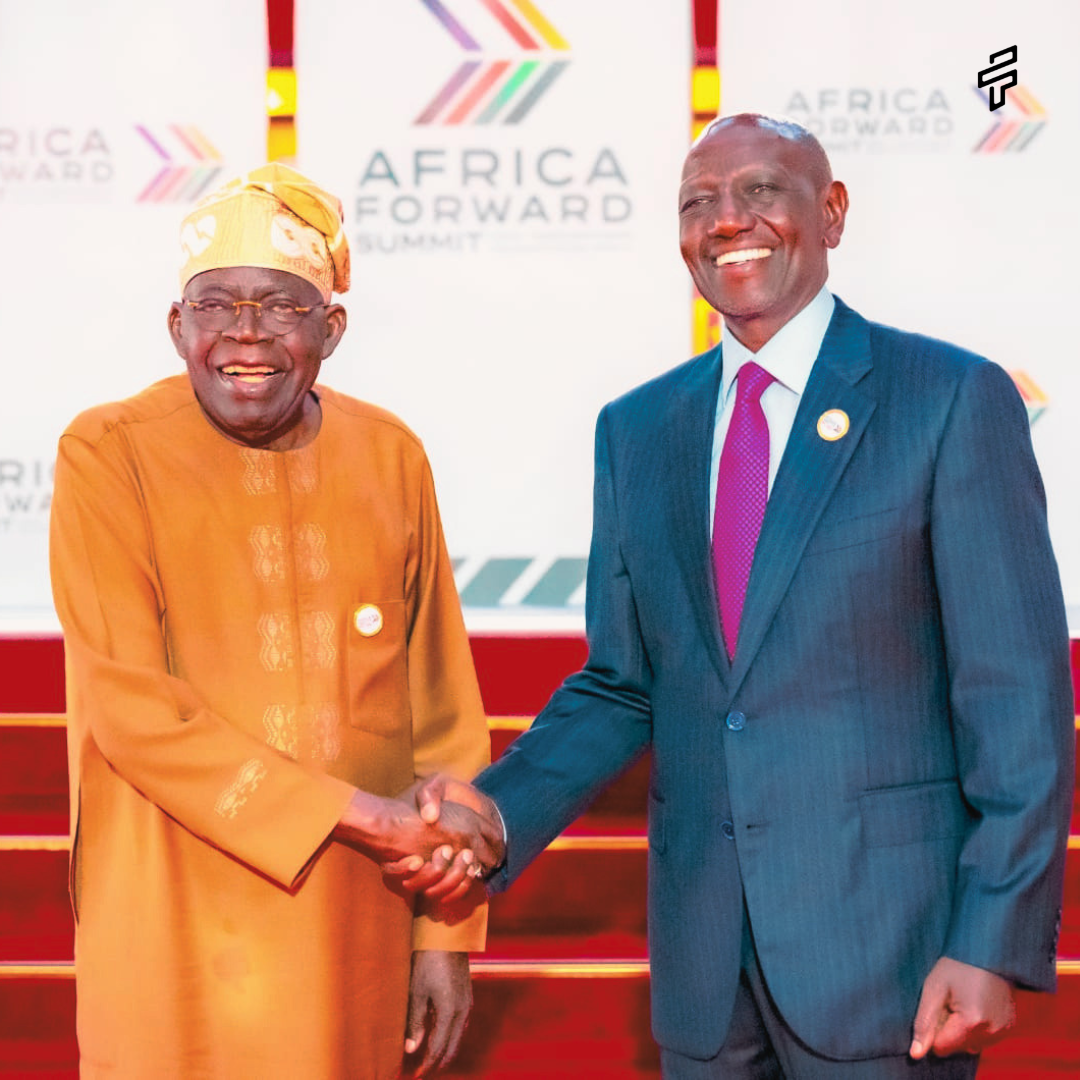
President Bola Tinubu has called for an overhaul of the global financial system, saying Nigeria will spend about $11.6 billion servicing debt in 2026 — nearly half of projected government revenue. Reuters reported that Nigeria spent $5.15 billion on debt service in 2025, according to the Debt Management Office.
Speaking at the Africa Forward Summit in Nairobi, Tinubu argued that high borrowing costs and limited access to long-term finance are diverting African resources away from industry, skills, infrastructure, healthcare and education. The summit, co-hosted by Kenya and France, brought together leaders from more than 30 countries.
Tinubu’s argument reflects a wider African frustration: governments are being told to reform, stabilise and invest, while also paying risk premiums that make long-term development finance expensive. Nigeria has already removed fuel subsidies, allowed major currency adjustments and pursued tax reforms, but fiscal space remains tight.
The politics are delicate. Tinubu can point to difficult reforms as evidence of seriousness. But Nigerians are also living through the social cost of those reforms, including inflation, weaker purchasing power and pressure on businesses. A global-finance critique may resonate internationally, but domestically the question remains whether reform delivers visible relief.
For the continent, Tinubu’s message is part of a wider shift. African leaders are increasingly framing debt not only as a national-management problem, but as a structural issue in the international financial system. They argue that African countries are priced as permanently high-risk borrowers, even when their development needs require patient capital.
The consequence is circular. High debt costs limit public investment. Weak public investment slows productivity. Slower productivity reinforces risk perceptions. Breaking that loop will require domestic discipline, but also fairer access to long-term finance.
Tinubu’s intervention gives Nigeria a prominent voice in that debate. Whether it produces reform is another question.