
South Sudan’s Latest Shake-Up Deepens Succession Uncertainty in Juba
South Sudan’s president has removed two senior officials, including the army chief, in another reshuffle watched closely by analysts.
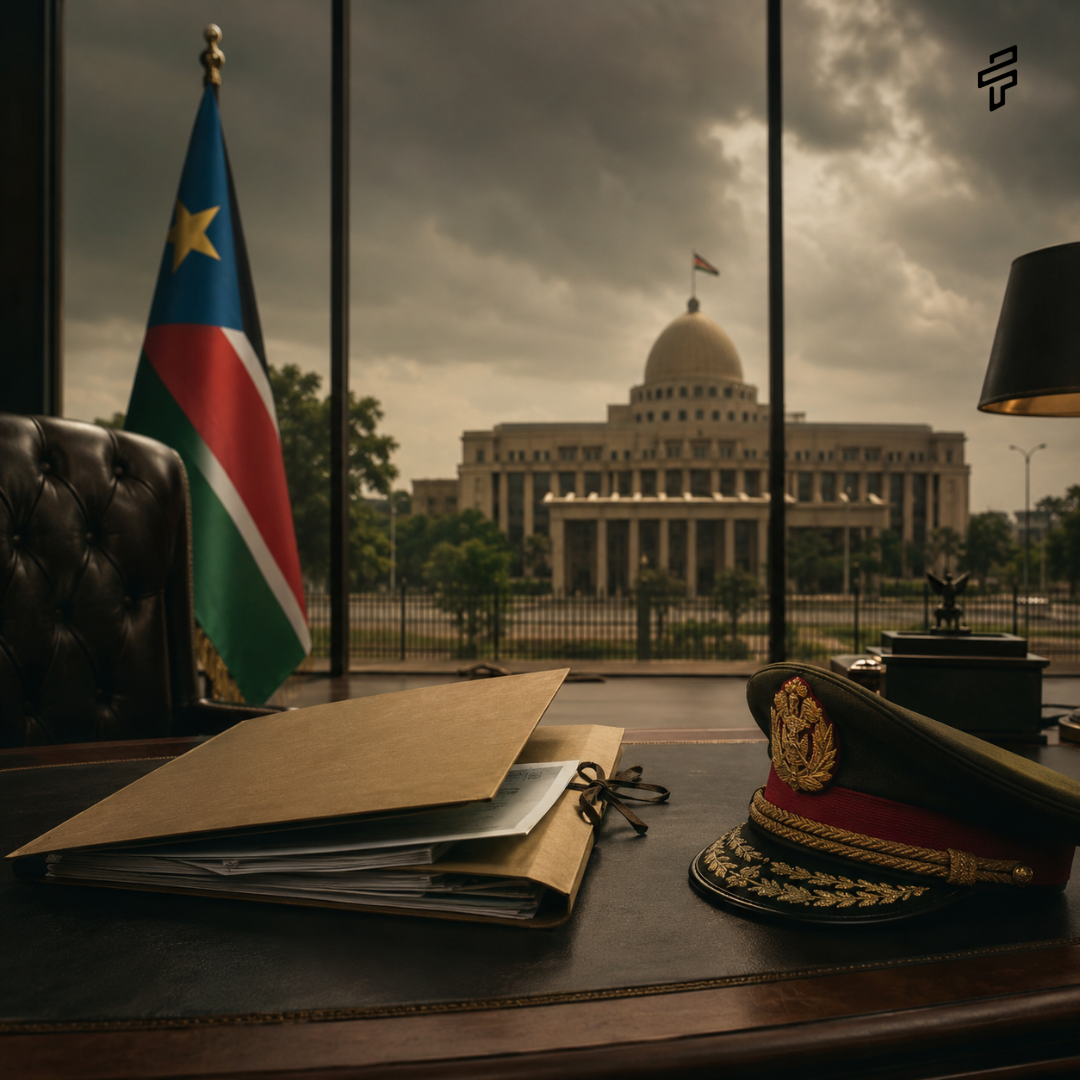
South Sudan’s President Salva Kiir has dismissed the country’s army chief and a finance minister who had been in office for less than three months, according to state media cited by Reuters. The reshuffle is the latest in a pattern of senior changes that analysts view as part of Kiir’s effort to consolidate power amid succession uncertainty.
The removed army chief, General Paul Nang, had been in the role since October. His tenure came under scrutiny as insecurity worsened across the country. Kiir has reappointed General Santino Deng Wol, a close ally from the president’s Bahr El Gazal region, who previously served as army chief from 2020 to 2024.
The finance ministry has also changed hands. Salvatore Garang Mabiordit, appointed on 23 February, has been replaced by Kuol Daniel Ayulo, a career technocrat with previous experience as an undersecretary in the finance and trade ministries.
The political signal is clear. Kiir is continuing to adjust the security and economic centre of government at a time when South Sudan remains far from completing the reforms promised under the 2018 peace agreement. Those reforms include unifying the armed forces and holding elections.
The army appointment is particularly important. In South Sudan, military leadership is not only an operational question. It is tied to ethnic balance, elite loyalty, regional representation and control over coercive power.
The finance ministry matters for a different reason. South Sudan’s economy remains deeply exposed to oil revenue volatility, corruption concerns, unpaid salaries and pressure from humanitarian need. A technocratic appointment may reassure some observers, but no finance minister can deliver stability without political backing and predictable revenue.
Kiir’s reshuffle may strengthen his control in the short term. But in a fragile state, repeated elite changes can also signal uncertainty. South Sudan’s central question remains unresolved: whether the political class can move from managing power to building institutions.