
New Sudanese Banknotes Deepen the Country’s De Facto Split
Fresh Sudanese pound notes circulating in RSF-held areas point to a deeper institutional fracture in Sudan’s war, where rival authorities are now contesting not only territory but the basic machinery of the state.
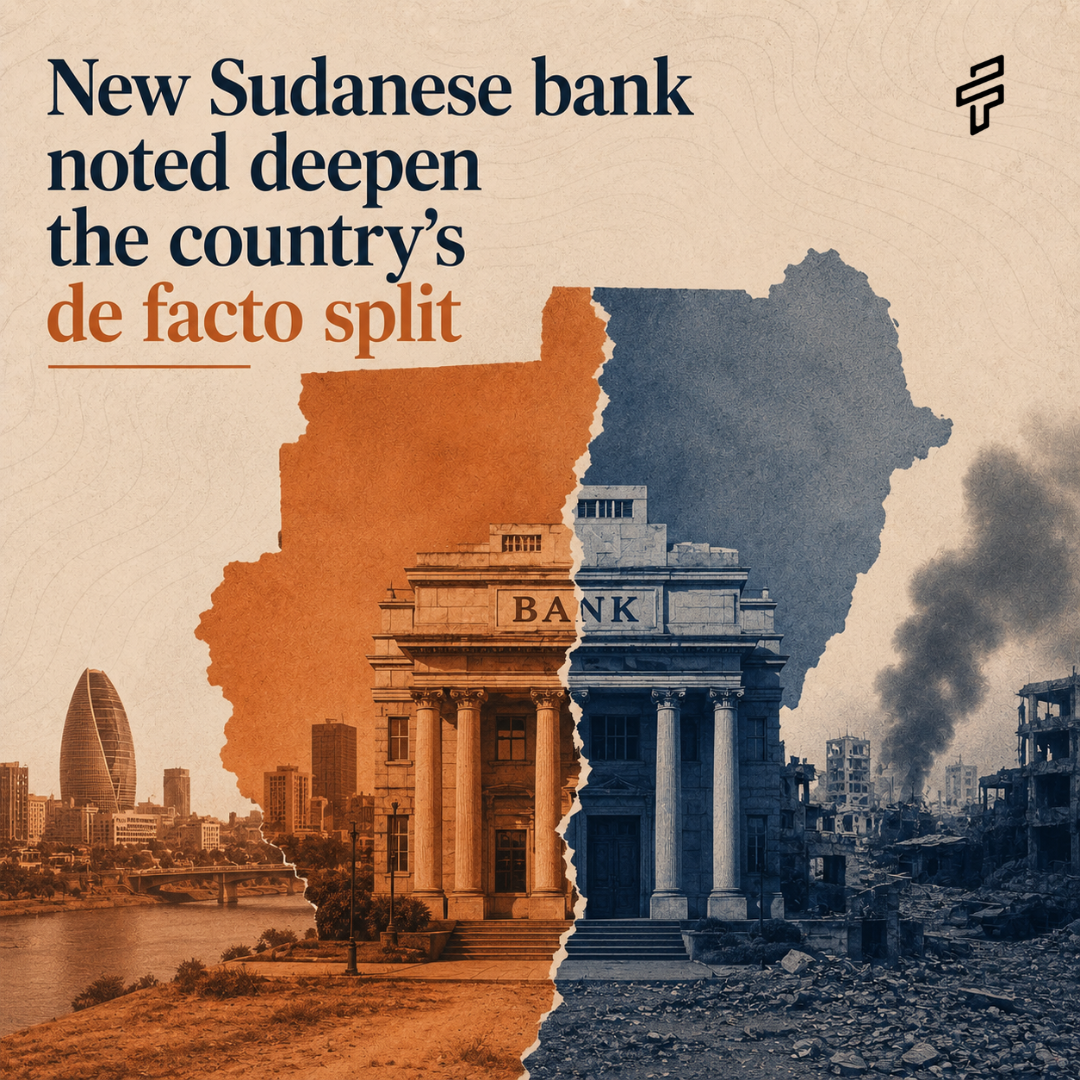
Newly issued Sudanese pound notes have begun circulating in territory controlled by the Rapid Support Forces, raising questions over their origin and deepening the country’s de facto division. Reuters reported that the RSF controls large areas including Darfur and has gradually sought to assume state-like functions, including paying civil servant salaries in areas under its control.
Currency has become part of the war. The army-led government began issuing new 500- and 1,000-pound notes after declaring older notes invalid in 2024. The RSF rejected the new currency, and cash shortages followed in areas it controlled. The circulation of fresh notes in those same areas now suggests that the economic front of Sudan’s war is becoming more complex and more dangerous.
The significance goes beyond banknotes. The RSF has already established a parallel cabinet, known as the “Tasis” government, in areas it controls. If a rival authority can distribute salaries, manage cash and regulate daily economic life, Sudan’s fragmentation becomes more institutionalised.
This is how states fracture in practice. Not only through frontlines and checkpoints, but through separate administrations, separate salaries, separate documents and eventually separate economies. Sudan is moving closer to that reality.
For civilians, the immediate cost is confusion and vulnerability. Currency uncertainty affects trade, wages, savings and humanitarian access. For the region, the concern is larger: a prolonged de facto partition of Sudan would deepen instability across the Horn of Africa, the Sahel and Red Sea corridor.
Sudan’s war is already one of the world’s gravest humanitarian crises. The emergence of parallel economic systems shows that the longer the conflict lasts, the harder it will be to reconstruct a single national authority.