
Sudan’s war is becoming a test of whether sanctions can stop the networks sustaining it
The United States is pushing for stronger United Nations sanctions against Sudan’s warring factions as the conflict enters its fourth year, seeking to expand an existing arms…
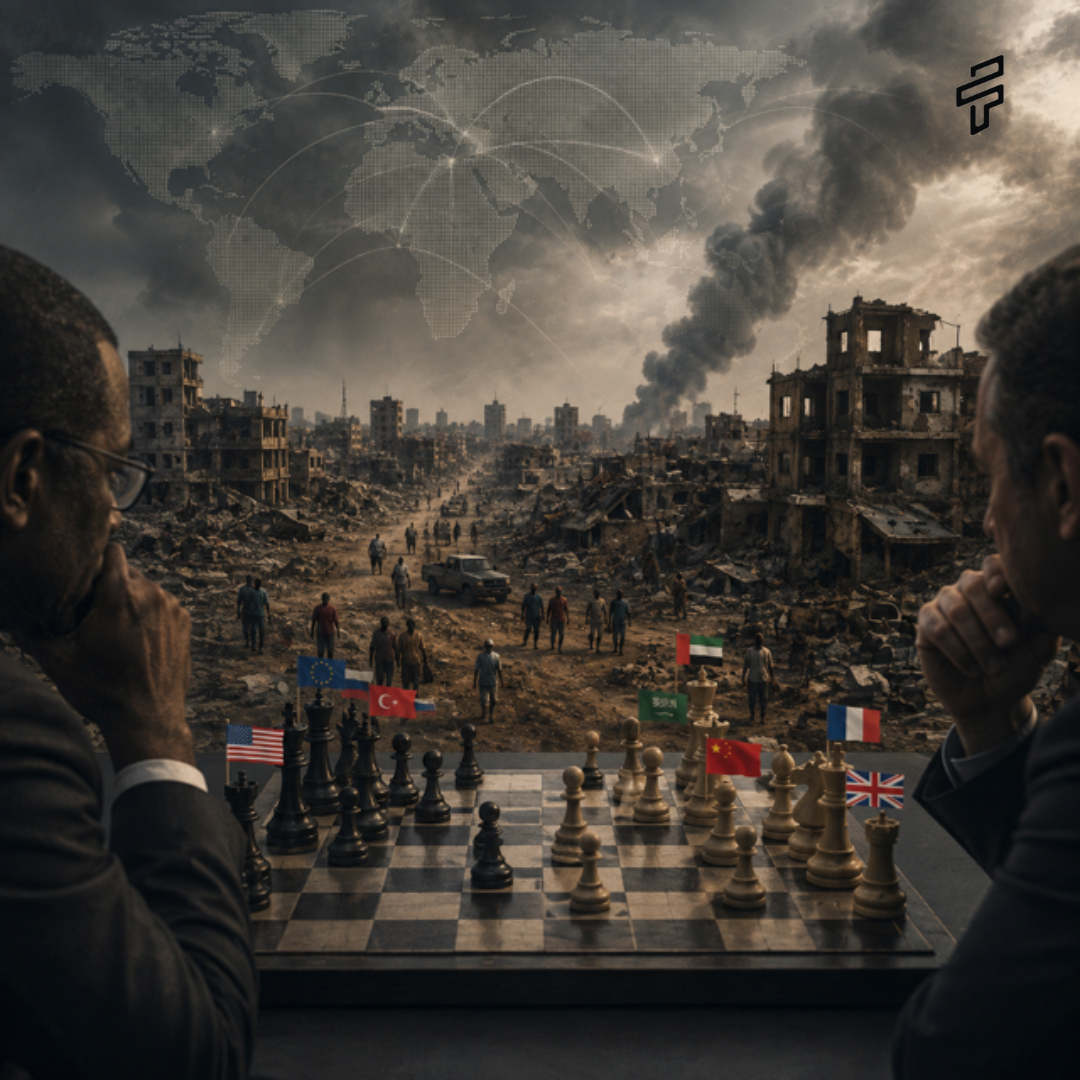
The United States is pushing for stronger United Nations sanctions against Sudan’s warring factions as the conflict enters its fourth year, seeking to expand an existing arms embargo on Darfur to the rest of the country and extend restrictions to drones and related technologies. Washington says the measures are intended to increase pressure on the Sudanese Armed Forces and the Rapid Support Forces to return to negotiations. But the proposal faces a larger problem: the war is no longer sustained by the two forces alone. Money, weapons and political support flowing through regional networks have helped both sides maintain the capacity to fight.
The diplomatic push comes as Sudan’s humanitarian crisis continues to deteriorate. At least 59,000 people have been killed, around 13 million displaced and famine conditions reported in several parts of the country, according to figures presented to the UN Security Council and cited by the Associated Press. The longer the conflict continues, the more difficult it becomes to separate the immediate fighting from the economic and political systems that have grown around it.
Sudan’s war began in April 2023 after a power struggle between army chief Abdel Fattah al-Burhan and RSF commander Mohamed Hamdan Dagalo, widely known as Hemedti. The two men had previously been partners in the political transition that followed the overthrow of longtime ruler Omar al-Bashir. Their rivalry over the future of the state, including the proposed integration of the RSF into the regular army, eventually became an open war.
More than three years later, neither side has secured a decisive victory. The Sudanese Armed Forces retain control over much of the north and east, including Port Sudan, while the RSF has established itself across large parts of Darfur and western Sudan. The result is a country increasingly divided between competing military authorities, with state institutions weakened and millions of civilians displaced from their homes.
The conflict has also become deeply internationalised. Egypt has provided political backing to Sudan’s military leadership, while the United Arab Emirates has repeatedly been accused of supplying support to the RSF, allegations Abu Dhabi denies. Other regional actors have their own strategic interests in Sudan, from the Red Sea to agriculture and gold. That makes any attempt to isolate the combatants more difficult because the networks sustaining the war extend beyond Sudan’s borders.
This is the central logic behind Washington’s sanctions proposal. The United States is effectively arguing that Sudan’s factions will have less incentive to negotiate if they continue to believe that external partners can provide the resources needed to sustain a war. Expanding the arms embargo and restricting drones and related technologies would attempt to make those external supply lines more difficult to use.
But sanctions are only effective when they change the calculations of the people capable of continuing the conflict. That means targeting more than military commanders or formal arms shipments. It requires disrupting the financial networks that allow weapons to be purchased, gold to be traded and military operations to be supplied.
Sudan’s gold industry is particularly important. Gold has become a major source of hard currency during the war, providing competing actors with access to revenues that can be difficult for international sanctions to trace or block. Trade routes run through neighbouring countries and involve commercial actors far beyond Sudan itself. That gives the conflict an economic resilience that makes military pressure alone unlikely to produce a settlement.
The RSF does not need the kind of conventional state budget required to sustain a regular army, while the SAF also benefits from external political and financial relationships. The international community is therefore confronting an uncomfortable contradiction: it is trying to persuade the combatants to negotiate while parts of the regional economy continue to provide them with reasons and resources to keep fighting.
The focus on drones reflects another change in the nature of the conflict. Unmanned systems have become increasingly important to modern warfare, allowing forces to conduct surveillance and strikes without relying entirely on conventional aircraft. Expanding sanctions to cover drones and related technologies would recognise that restricting traditional weapons shipments is no longer enough to account for how the battlefield is evolving.
Yet the biggest obstacle may remain political rather than technological. Burhan has rejected the threat of sanctions and continues to argue that military victory is possible. Both the SAF and RSF have repeatedly shown that they believe battlefield gains can strengthen their eventual bargaining position. As long as each side thinks further fighting could improve its position, the incentive to compromise remains weak.
That is why pressure on the war economy matters. A durable ceasefire is unlikely to emerge simply because diplomats produce another peace proposal. The calculations of the combatants have to change. If military leaders believe they can continue receiving weapons, financing and political protection while gaining territory or influence, negotiations will remain secondary to the battlefield.
The humanitarian consequences make that increasingly dangerous. Every additional year of war weakens the possibility of rebuilding a functioning national state. Infrastructure is being destroyed, public institutions are fragmenting, professionals are leaving the country and millions of Sudanese are establishing lives elsewhere. Even if the guns stop, the political and administrative foundations needed to reconstruct the country will be far weaker than they were before the conflict began.
There is also a growing regional cost. Sudan occupies a strategically important position between the Sahel, the Horn of Africa, Egypt and the Red Sea, making its instability relevant far beyond its borders. Chad and South Sudan are already absorbing humanitarian and security pressures generated by the war, while Egypt views events in Sudan through the lens of its own national security and the Nile. Gulf states, meanwhile, have significant interests in Sudan’s Red Sea coastline, agricultural potential and natural resources.
The result is a conflict that has become both more international and more difficult to resolve. Foreign involvement can provide leverage, but it can also prolong the war if outside actors see strategic value in backing competing sides. Sanctions therefore face a basic test of credibility: whether governments and companies accused of sustaining the conflict actually face enough pressure to reconsider their behaviour.
That is the challenge facing Washington at the UN. Expanding the arms embargo would represent a meaningful escalation, but its impact would depend on whether it is accompanied by enforcement, financial pressure and a broader diplomatic strategy aimed at the networks that allow the war to continue.
Sudan does not primarily suffer from a shortage of peace plans. It suffers from a shortage of incentives to accept one.
The real measure of the latest US initiative will therefore not be whether another resolution is passed in New York. It will be whether the men directing Sudan’s war begin to believe that continuing it is becoming more costly than ending it.