
South Sudan’s peace deal is losing ground as violence reaches the people sent to protect it
Two Ethiopian UN peacekeepers were killed this week when armed men ambushed a UNMISS patrol travelling towards Pajut in Jonglei State, in one of the most serious attacks on the…
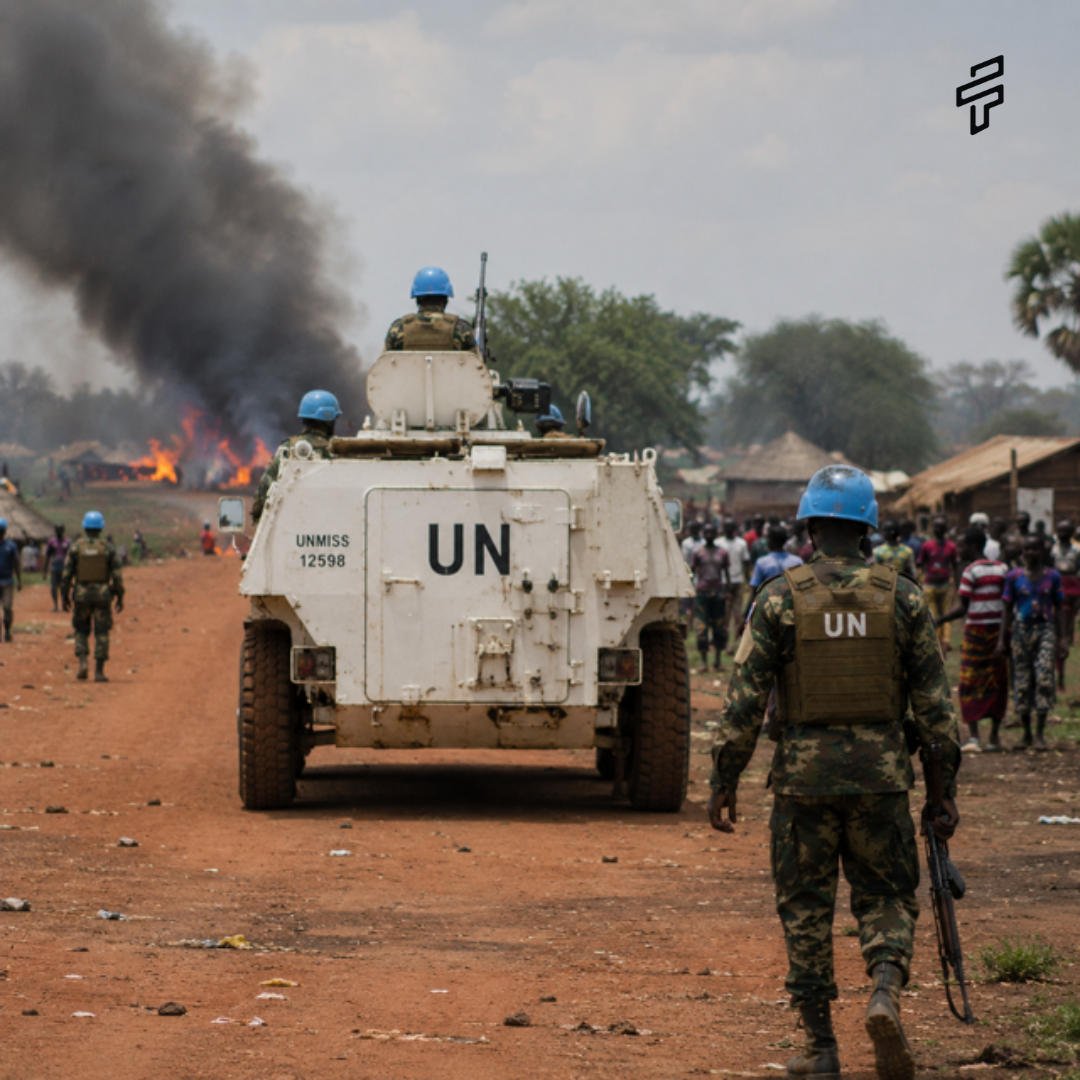
Two Ethiopian UN peacekeepers were killed this week when armed men ambushed a UNMISS patrol travelling towards Pajut in Jonglei State, in one of the most serious attacks on the United Nations mission in South Sudan this year. Seven other people were wounded, including three peacekeepers, two South Sudanese police officers and two civilian staff members. The UN responded by deploying a quick-reaction force to the area.
The attack brings the number of UN peacekeepers killed by militias in South Sudan this year to nine. But its significance extends beyond the deaths themselves. UNMISS is one of the few institutions with a national mandate to operate across South Sudan, monitor violations and protect civilians. When its personnel cannot move safely through contested areas, it becomes harder for the international community to carry out one of the central functions of the peace process: maintaining enough security for political agreements to have meaning outside the capital.
That problem is becoming increasingly visible as South Sudan’s 2018 peace agreement loses ground. The deal was intended to end the civil war that began in 2013 after a political dispute between President Salva Kiir and his former vice-president Riek Machar. The agreement created a power-sharing arrangement between their political camps, but it never fully resolved the competition between the two men or the wider struggle over political and security power. Machar has since faced renewed political pressure and detention, while violence has increased in several parts of the country.
Jonglei has become one of the most dangerous areas. Armed community militias operate alongside political and security actors, and longstanding disputes between communities over land, cattle and resources can quickly become intertwined with national politics. This makes South Sudan’s current crisis difficult to classify as either a conventional civil war or simple communal violence. It is a political and security crisis in which national rivalries, local grievances and armed groups increasingly reinforce one another.
The UN patrol attack matters because it shows how difficult it has become to impose authority over that environment. The danger is cumulative. Violence restricts humanitarian access, displacement increases pressure on communities, communities arm themselves for protection, local commanders become harder for national political leaders to control and the government responds with greater force. Each stage creates new grievances and makes the original political dispute harder to resolve.
That is the problem the 2018 agreement was never fully designed to address. Its architecture was built around power-sharing between national political elites, particularly Kiir and Machar. But six years of continued instability have created new centres of power. Local armed groups have become more autonomous, communities have accumulated grievances, economic conditions have deteriorated and the country’s already fragile institutions have struggled to provide basic security.
A peace agreement negotiated between political leaders cannot easily control those forces once they acquire their own interests. A militia commander who benefits from controlling territory, cattle routes or access to resources may have little incentive to accept a national compromise that threatens that position. Likewise, communities that have repeatedly experienced violence may be reluctant to disarm simply because political leaders in Juba announce another agreement.
This is why the killing of UN peacekeepers should not be treated as an isolated security incident. It is an indication of the widening gap between the political settlement in Juba and the realities faced by communities elsewhere in the country. If an international force with a mandate to protect civilians struggles to operate safely, ordinary communities have even fewer guarantees that the state can protect them.
The international response is becoming more urgent. The United States has called for renewed dialogue to revive the stalled peace process and prevent South Sudan from sliding back into full-scale civil war. But diplomacy faces a familiar problem: political leaders may have incentives to preserve the appearance of stability without accepting the deeper reforms required to redistribute power and reduce their dependence on armed networks.
For local communities, the calculation is different. A national peace agreement may promise political stability, but that promise means little if villages remain vulnerable to armed raids or if displaced families cannot safely return home. The longer violence continues, the more difficult it becomes to persuade communities that disarmament and reconciliation will actually make them safer.
South Sudan’s geography compounds the problem. The country is enormous, its road network is limited and many communities are difficult to reach even under normal conditions. During the rainy season, large areas can become almost inaccessible by road. This leaves the government heavily dependent on UN peacekeepers and humanitarian organisations to reach populations that it cannot consistently serve itself, while simultaneously giving armed groups considerable room to operate.
The regional consequences are also significant. South Sudan borders Sudan, Ethiopia, Kenya, Uganda and the Democratic Republic of Congo, meaning prolonged instability can affect refugee flows, arms trafficking, trade and humanitarian operations across several countries. The war in neighbouring Sudan has added another layer of uncertainty, with South Sudan simultaneously dealing with refugees arriving from the conflict and disruptions to the infrastructure through which its own economy depends on Sudan.
Oil makes that relationship particularly important. South Sudan remains heavily dependent on oil exports, much of which passes through Sudan before reaching international markets. Continued instability therefore threatens not only government revenues in Juba but also an economic relationship that both countries rely upon at a time when Sudan itself remains at war.
The killing of the Ethiopian peacekeepers comes at a moment when South Sudan has little room for another cycle of escalation. The country has not fully recovered from its previous civil war, its political institutions remain fragile and its population continues to face severe humanitarian pressures. A collapse of the existing political arrangement would therefore not simply reopen an old conflict. It could create the conditions for a more fragmented one involving national forces, political factions and increasingly autonomous local armed groups.
The immediate priority is accountability for the attack and the protection of UN personnel. The larger priority is restoring a political process that communities outside Juba believe can actually change their circumstances.
Future Reports will watch whether Kiir and Machar’s political camps return to meaningful negotiations, whether violence in Jonglei and neighbouring states continues to intensify, and whether UNMISS can maintain access to civilians in areas where the government’s own presence remains limited.
South Sudan does not need another agreement that exists mainly on paper. It needs a political settlement capable of reaching beyond Juba — and enough authority on the ground to make that settlement worth believing in.