
DR Congo’s World Cup Style Turns Football Into Cultural Diplomacy
DR Congo’s return to the World Cup has become more than a sporting story. Through fashion, symbolism and public performance, the team is projecting national memory onto a global stage.
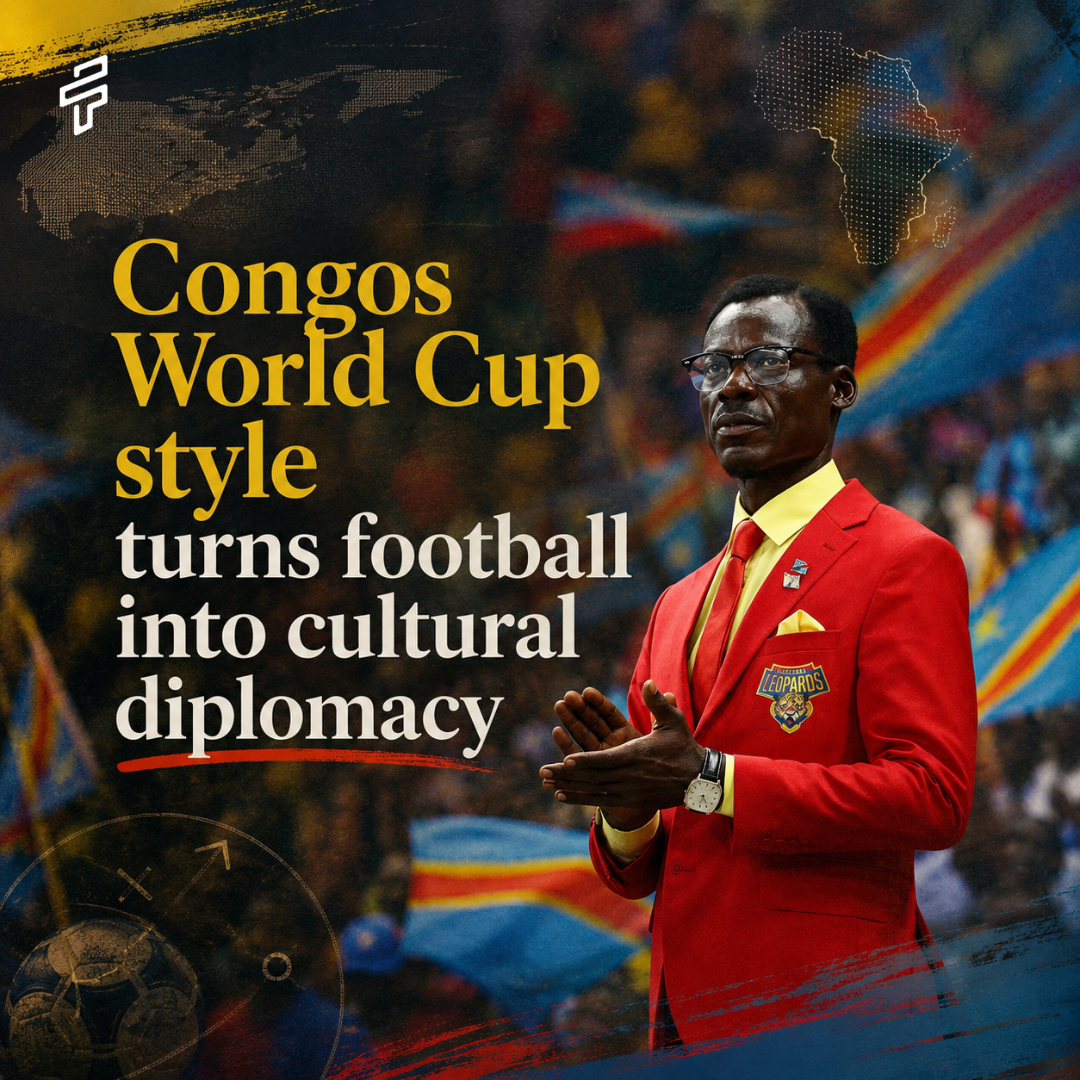
DR Congo’s World Cup campaign has become one of the tournament’s strongest cultural stories. The team’s leopard-themed suits, designed by Congo-born, Paris-based creative Alvin Mak, drew attention for turning the squad’s arrival into a statement of style, heritage and national confidence. Vogue reported that the look was inspired partly by La Sape, the Congolese culture of elegance and self-expression, and by the leopard as a symbol of strength and pride.
The symbolism extends beyond fashion. Michel Kuka Mboladinga, known as “Lumumba Vea,” arrived at the World Cup to support DR Congo with his distinctive statue-like tribute to Patrice Lumumba, the country’s independence leader. Reuters reported that his raised-arm pose recreates the stance of the Lumumba statue in Kinshasa, turning fandom into political memory.
This is why the World Cup belongs in the Arts section as much as the Sports page. DR Congo’s presence is not only about formation, possession and results. It is about how a country marked by conflict, extraction and political struggle chooses to represent itself before the world.
Fashion becomes diplomacy. Stillness becomes performance. A football team becomes a carrier of national memory.
For African teams, the expanded World Cup offers a larger cultural stage. The danger is that global coverage reduces them to underdogs or colourful side stories. DR Congo’s visual language resists that. It insists that African football carries history, aesthetics and political meaning.